
Fully Welded
Welding is at the core of Vahterus’ innovation and one of the most important processes in the building of Plate & Shell heat exchangers. To guarantee continuous production, Vahterus employs 105 welders and welding operators, and is constantly recruiting more.
Vahterus Editorial Team
The story of Vahterus’ fully welded plate heat exchanger stretches back more than 30 years. The first plate heat exchangers were manufactured in the 1890s in Germany. Their construction was based on a corrugated plate with a rubber gasket. This type of heat exchanger, called Plate & Frame, radically improved thermal efficiency compared to the previously developed Shell & Tube heat exchanger, and also reduced the size of the unit. The only weakness of the Plate & Frame heat exchanger was the rubber gasket, which limited the maximum operating pressure and temperature. Rubber also hardens over time, which can cause leaks. For the end-user this means high maintenance costs – even higher than the cost of a new model.
Almost 90 years on, in the late 1980s, Vahterus founder Mauri Kontu started developing a completely new type of heat exchanger with the aim of finding an improvement to the weakness of the Plate & Frame heat exchanger. ‘The idea was to investigate whether the pressure and temperature duration of the Shell & Tube heat exchanger could be combined with the good heat-transfer properties of the Plate & Frame heat exchanger. The goal was to create a next-generation product suited to a wide range of applications’, says Kontu.
The result of the research and development was a fully welded plate heat exchanger – the first of its kind in the world. The main innovation of the product is the fully welded structure, in which the round corrugated plates are welded together and enclosed in a shell without rubber gaskets between the plates. The product was named the Plate & Shell Heat Exchanger.
In Vahterus’ Plate & Shell Heat Exchanger, the problems caused by the gasket have been eliminated because the gaskets are replaced by welded connections. Thus, each unit has a durable and compact structure designed for safe and long operation. Developing and refining the Plate & Shell Heat Exchanger for various applications has been the focus of the company for more than 30 years. Vahterus also holds numerous patents related to the product and its production.
‘Welding is one of the most important processes in Vahterus’ production, and without skilled welders, we wouldn’t be able to build our heat exchangers’, says Kontu. Vahterus employs 105 welders and welding operators, and recruiting is ongoing. The employees responsible for welding specialise in different stages of production. The main components of the Plate & Shell Heat Exchanger are the plate pack and the pressure vessel. The plate pack is composed of a series of circular plates welded together around the perimeter and the port holes. The plate-pack production is largely automated and overseen by welding operators. The production line brings to mind a design-oriented tech company rather than a traditional workshop. Individual metal plates pass through an automated welding station for welding and quality control. After that, the finished and leak-tested plate packs are transferred for assembly either at the Valintie factory located a kilometer away, or to Vahterus subsidiaries in the United States or China.
Since the heat exchangers are individual and customised according to the customer’s needs, the pressure vessel surrounding the plate pack is specially made for each unit, most commonly of carbon steel or stainless steel. The shell production is mostly manual work and requires great precision. Vahterus currently produces around 4,000 heat exchangers per year, which means an average of 90 units enclosed in their glossy white shells every week.
A visit to Vahterus production facilities in Kalanti disproves the belief that welding is only suitable for men. 71% of the welding operators responsible for the production of plate packs are women. On the assembly line, conditions are tougher, but even there, women make up 24% of the total number of welders. ‘Modern workshops are clean, safe and fully automated. Working in them does not depend upon age or gender’, says Kontu.
Olli Sainala has worked as a welder at Vahterus since the very early days, when a former cowshed was repurposed as a workshop. Having followed the development of the industry for three decades, he considers the most obvious change in his work to be the tightening of various measures over the years. And, of course, the production looks very different these days, with state-of-the-art facilities and equipment. ‘I remember us assembling large, 5 to 6-metre-long heat exchangers outside in wintertime. The sense of achievement was remarkable when the project was finished’, says Sainala.
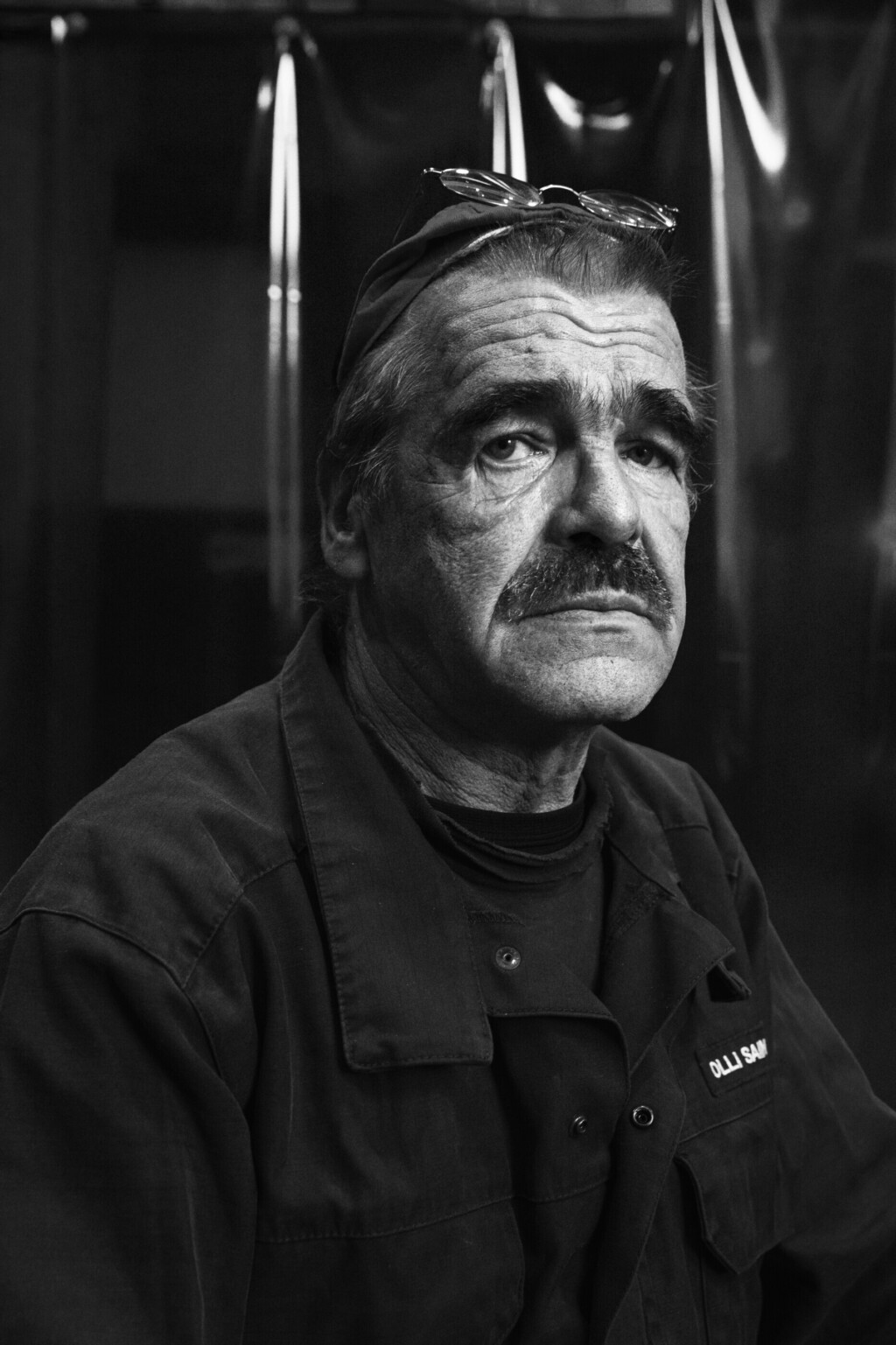
Having worked at Vahterus since the beginning, welder Olli Sainala has followed the development of the heat-transfer industry for three decades.
Before joining the Vahterus welding team, Henna Okkonen worked as a pattern cutter and seamstress in a local company in Uusikaupunki. After the company ceased operations, Okkonen applied for Vahterus’ recruitment training, through which she became an in-house welder 12 years ago. For Okkonen, a good day at work is one where steady progress is made with minimal interruptions, there are no material deficiencies and everything is planned correctly. ‘The best thing is when I get a lot done during the work day and the result is impeccable’, Okkonen says.
The most common issues encountered are related to materials and machines. Sometimes you have to re-think the material and style used for welding in order to achieve a great result. It’s not uncommon to find colleagues gathered together to consider a problem such as a cracking seam. ‘A while back, there were problems with the new automated stup end welding machine and we couldn’t get two tubes, clear and black, welded together’ says Okkonen. ‘I designed a new bevel for it, with which trial welding and various method tests were carried out, and now the machine can be used in production.’
For several members of the team, welding is not their first profession. The work requires basic training in the metal industry and hand-eye coordination as a special skill. If a person has natural ability to this type of precision, welding can be learned quickly.
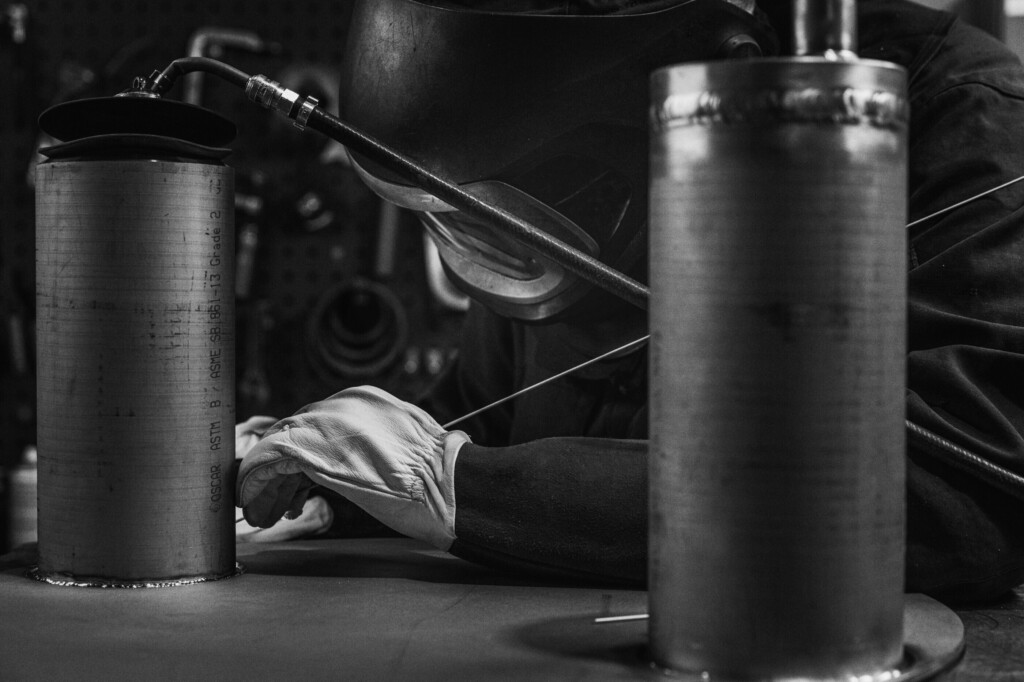
Henna Okkonen concentrates on TIG welding, one of the hardest types of welding to master. The process requires excellent hand-eye coordination, and results in very strong and clean welds.
Jonne Uotila has worked at Vahterus since 2004. Besides his welding talent, he’s known as a skilled drafter. ‘I don’t have a problem interrupting what I’m doing, switching to another task on the fly. Nothing is an issue because my work feels somehow very natural and easy for me’, Uotila says.
Alongside product innovations, operations and machines are currently developing at a fast pace. Vahterus has its own product, around which the entire production and equipment have been designed. In recent years, the company has invested significantly in automation – not to replace skilled staff, but to improve the flow of work. Automation means consistent quality, yet some tasks still require the agility of human hands. ‘I’m proud of how much the machines and quality have developed during the past 12 years’, Okkonen sums up. ‘Thanks to technology, we get more done than before, and with a better end result.’
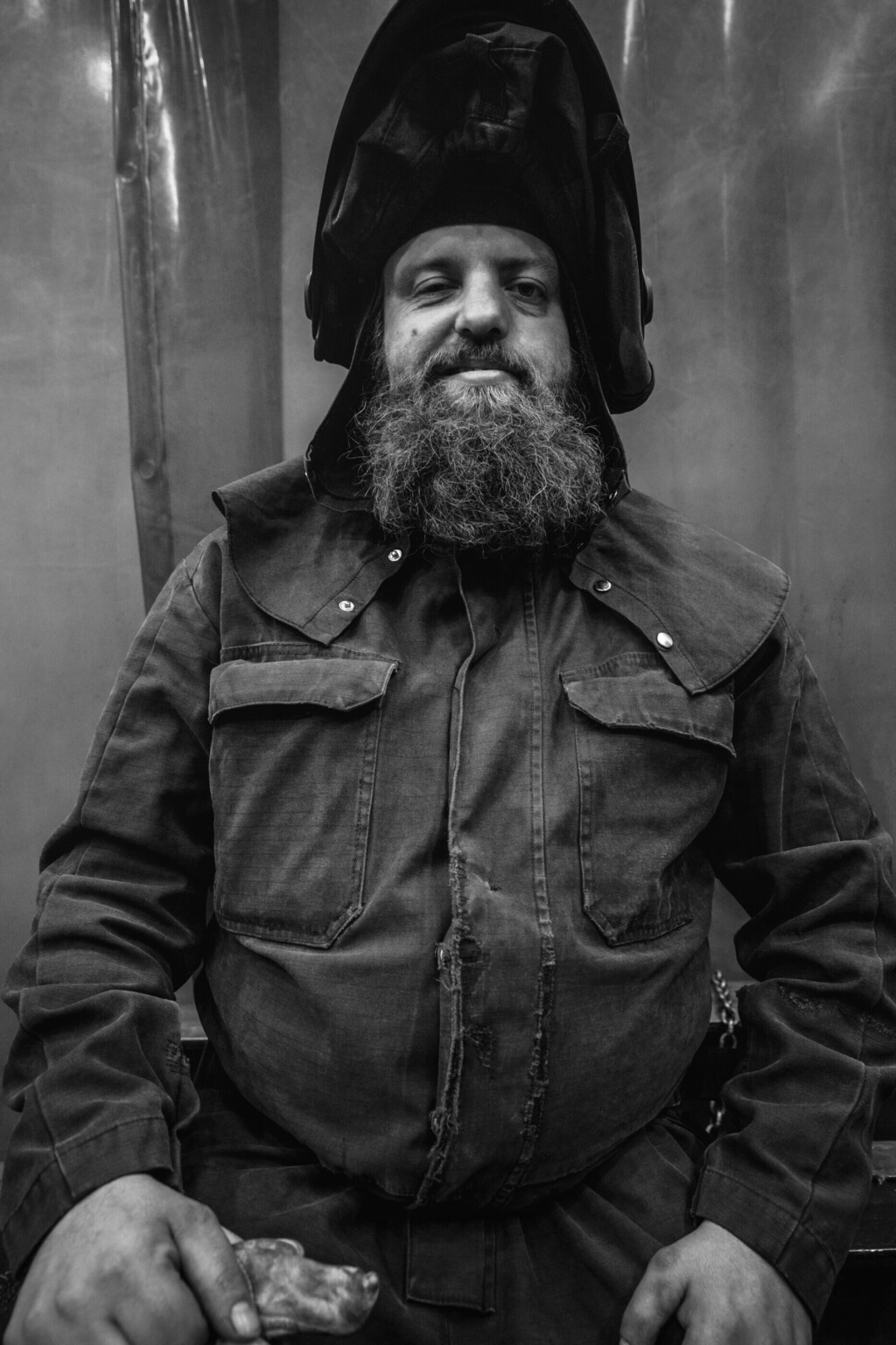
Jonne Uotila has found a job he has a natural talent for. Uotila has worked in the Vahterus welding team for nearly two decades.
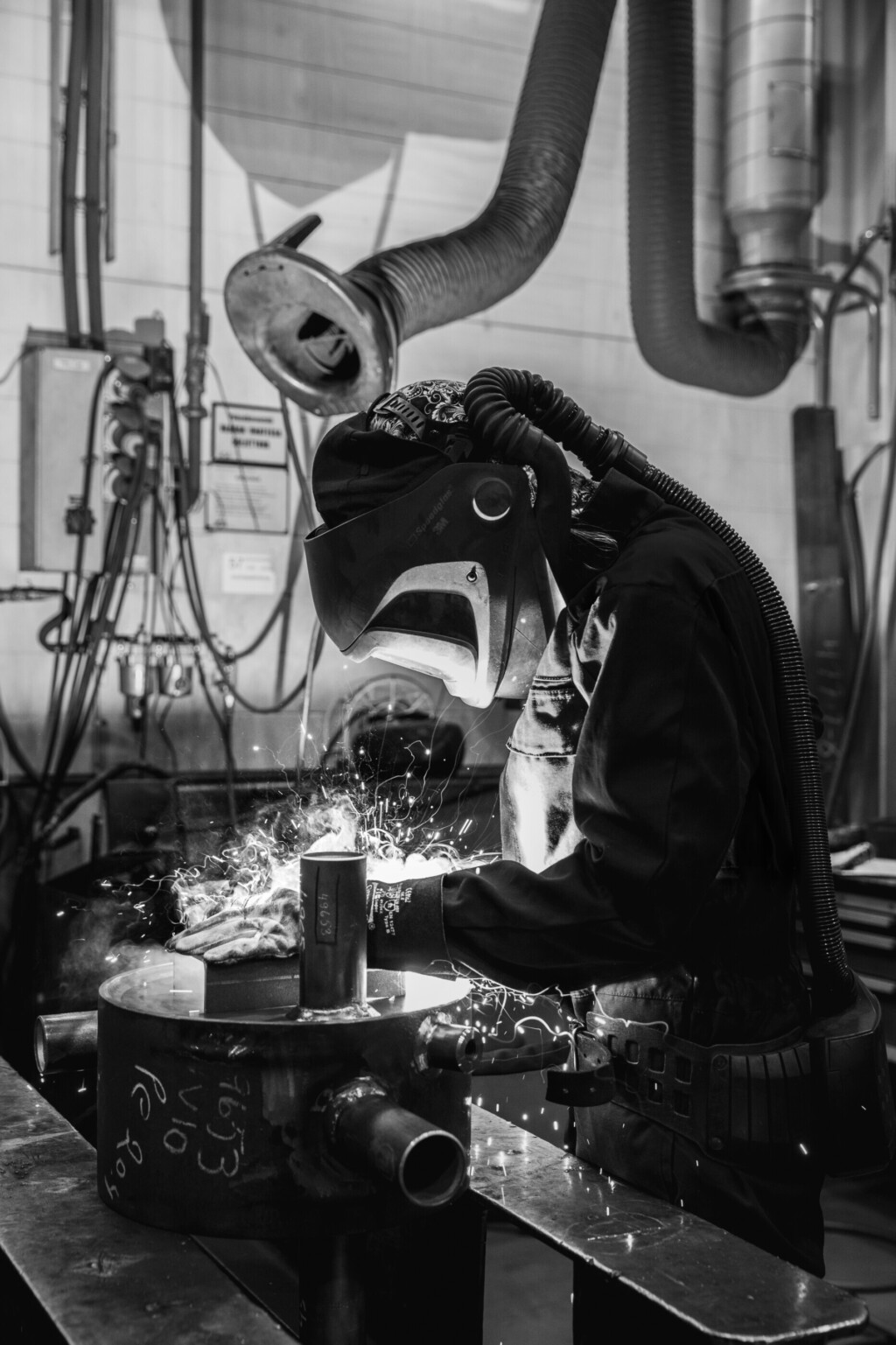
Welding of pressure vessel surrounding the plate pack.
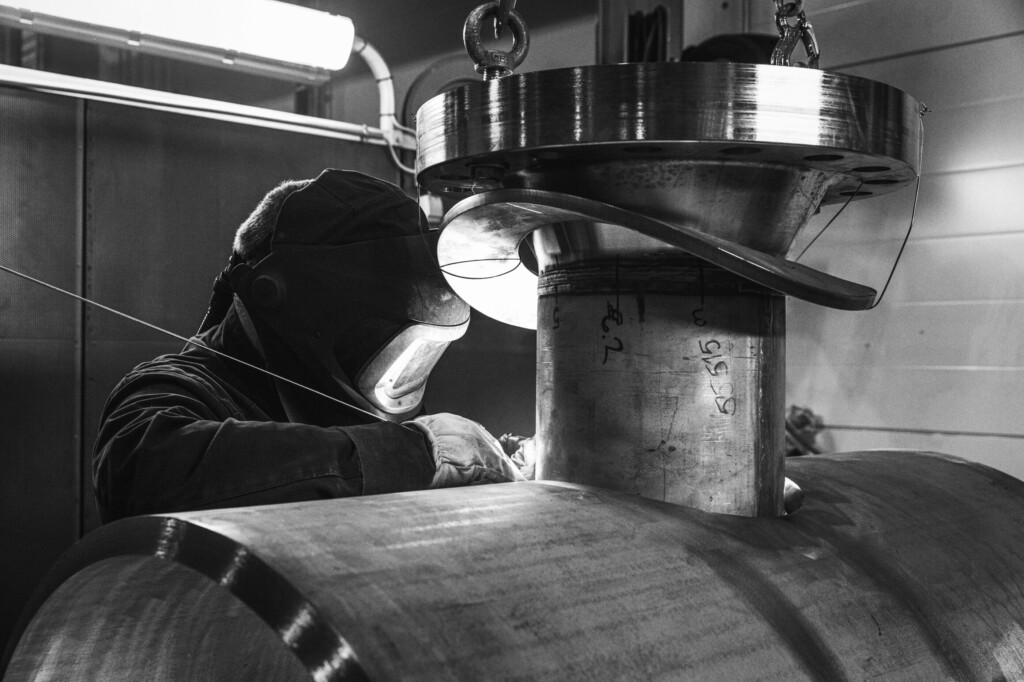
Saddle nozzle welding of pressure vessel, the shell specially made for each individual unit.
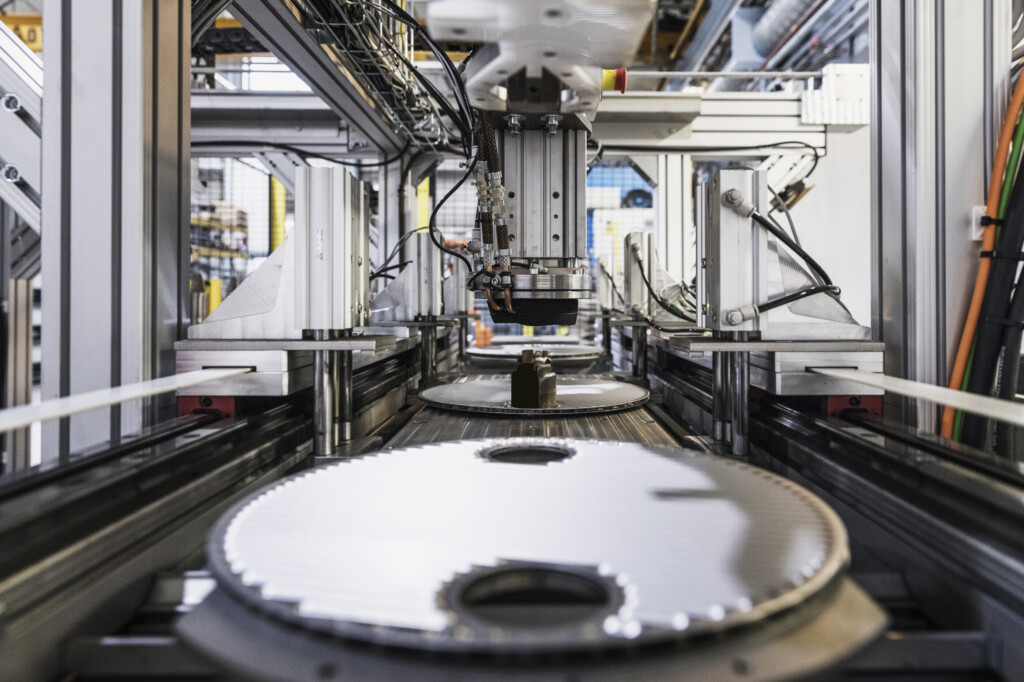
On the plate pack production line, individual metal plates pass through an automated welding station for welding and quality control.
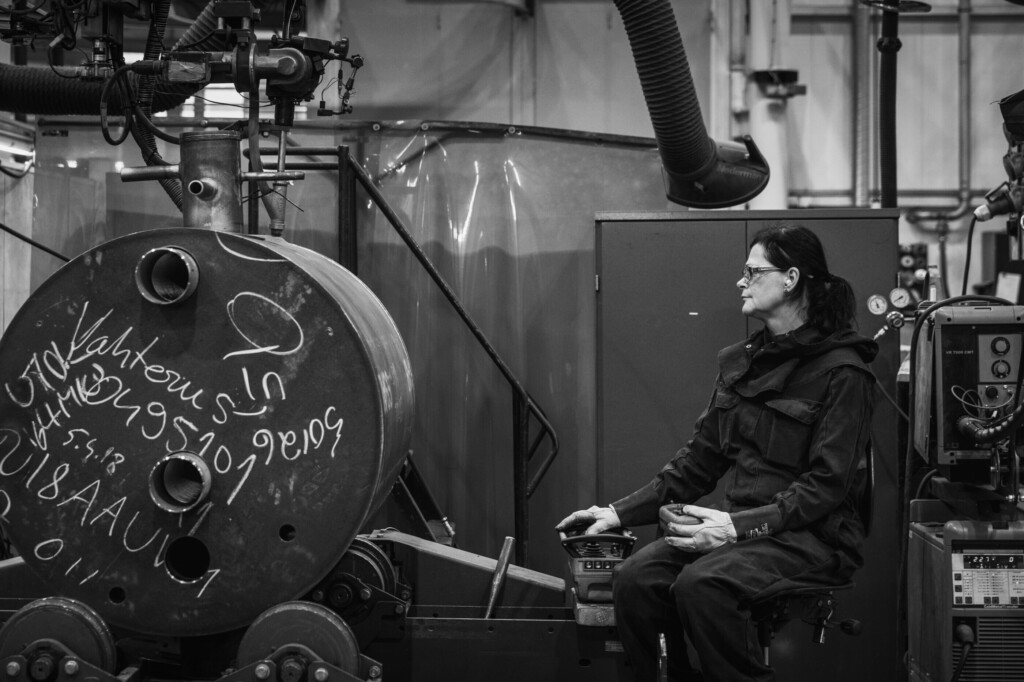
Sirle Bulak operating a submerged-arc welding machine.
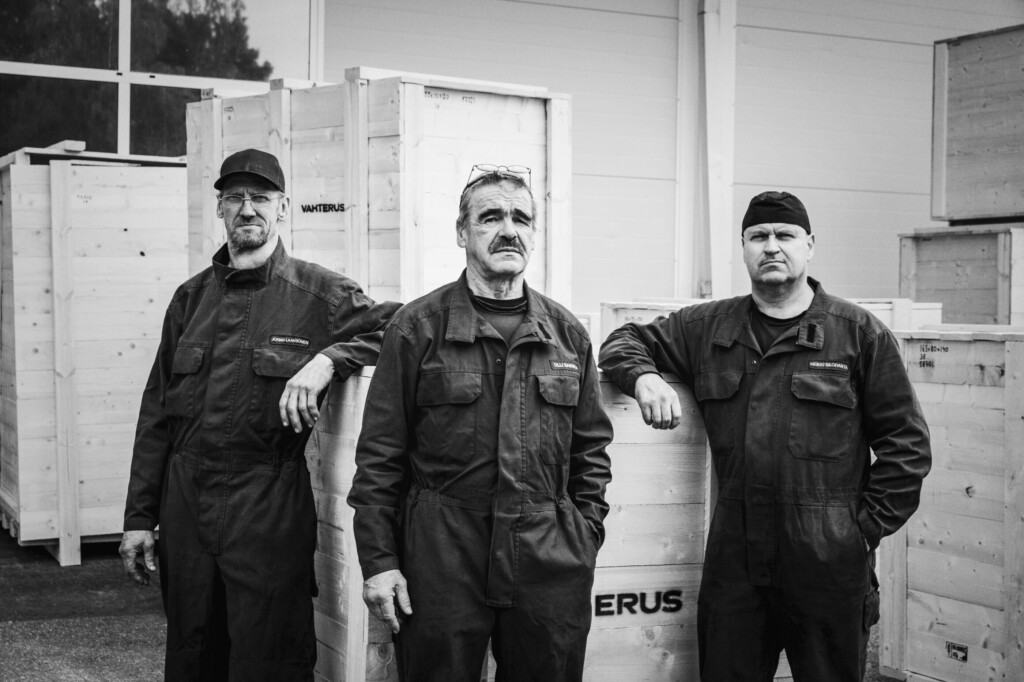
Talented hands taking a break. Pictured from the left, assembly worker Jorma Laaksonen and welders Olli Sainala and Heikki Siloranta.
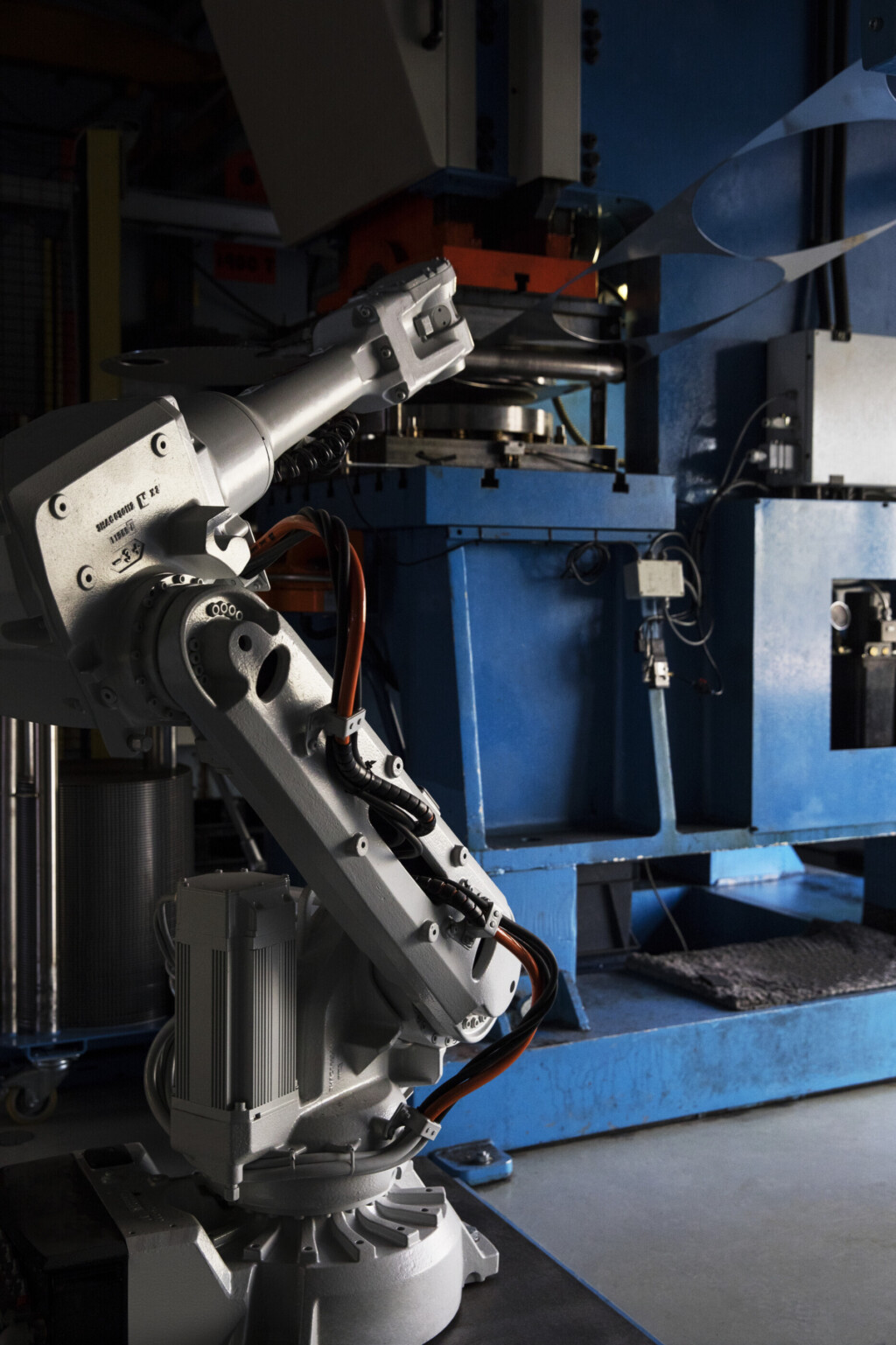
Heat transfer plate production taking place. As an innovation-led company, Vahterus has its own product, around which the entire production and equipment have been designed.